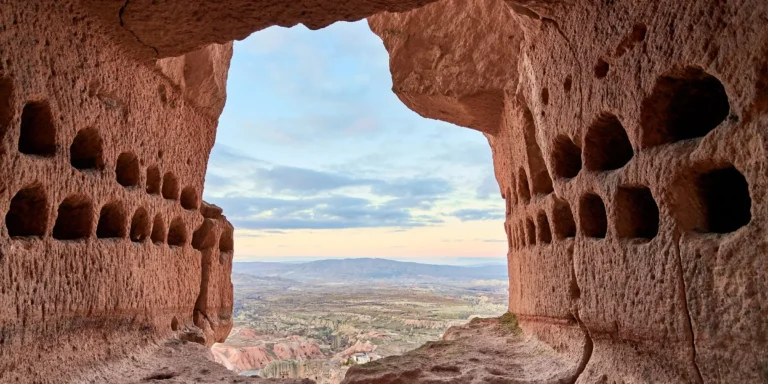
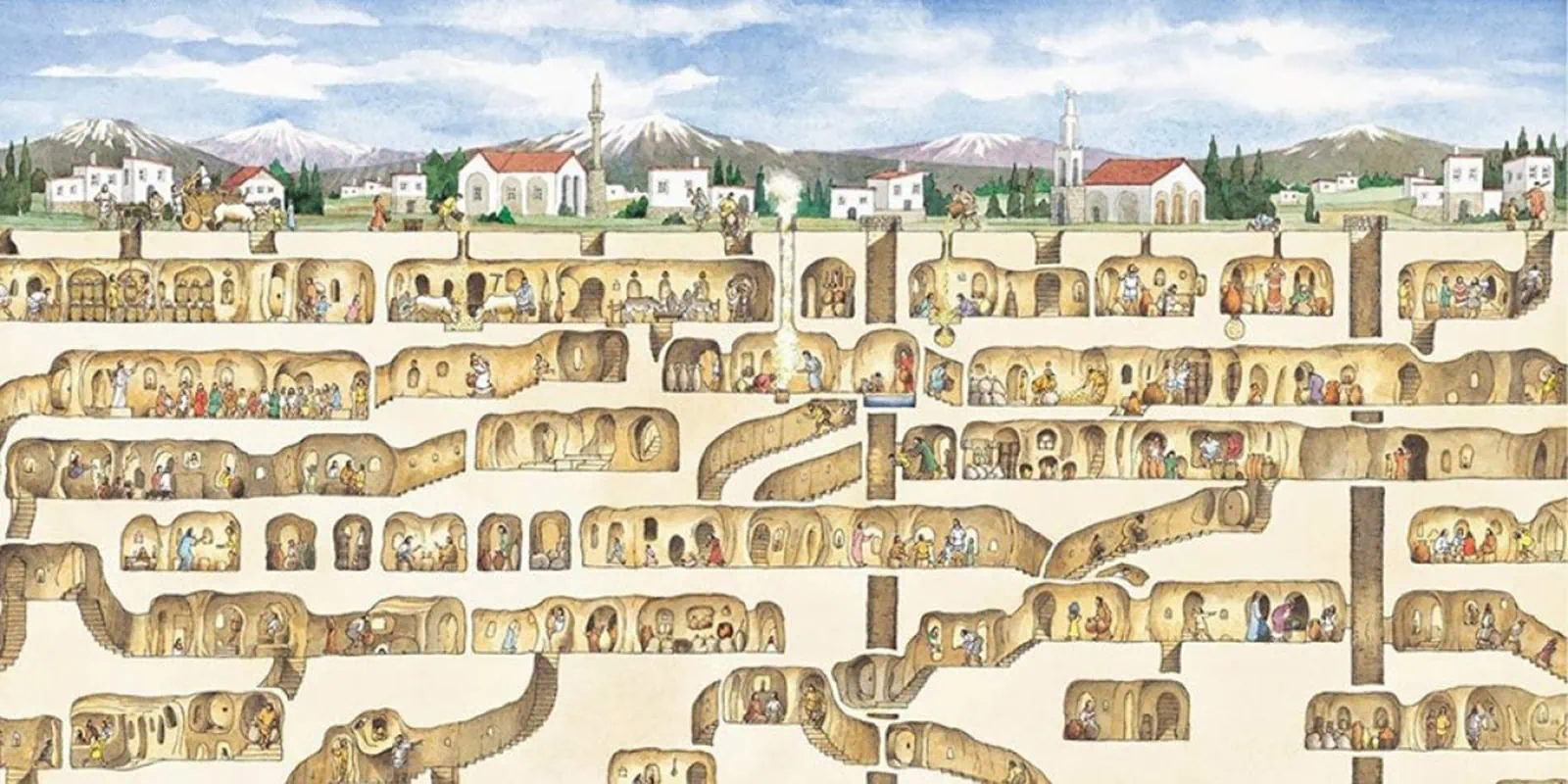
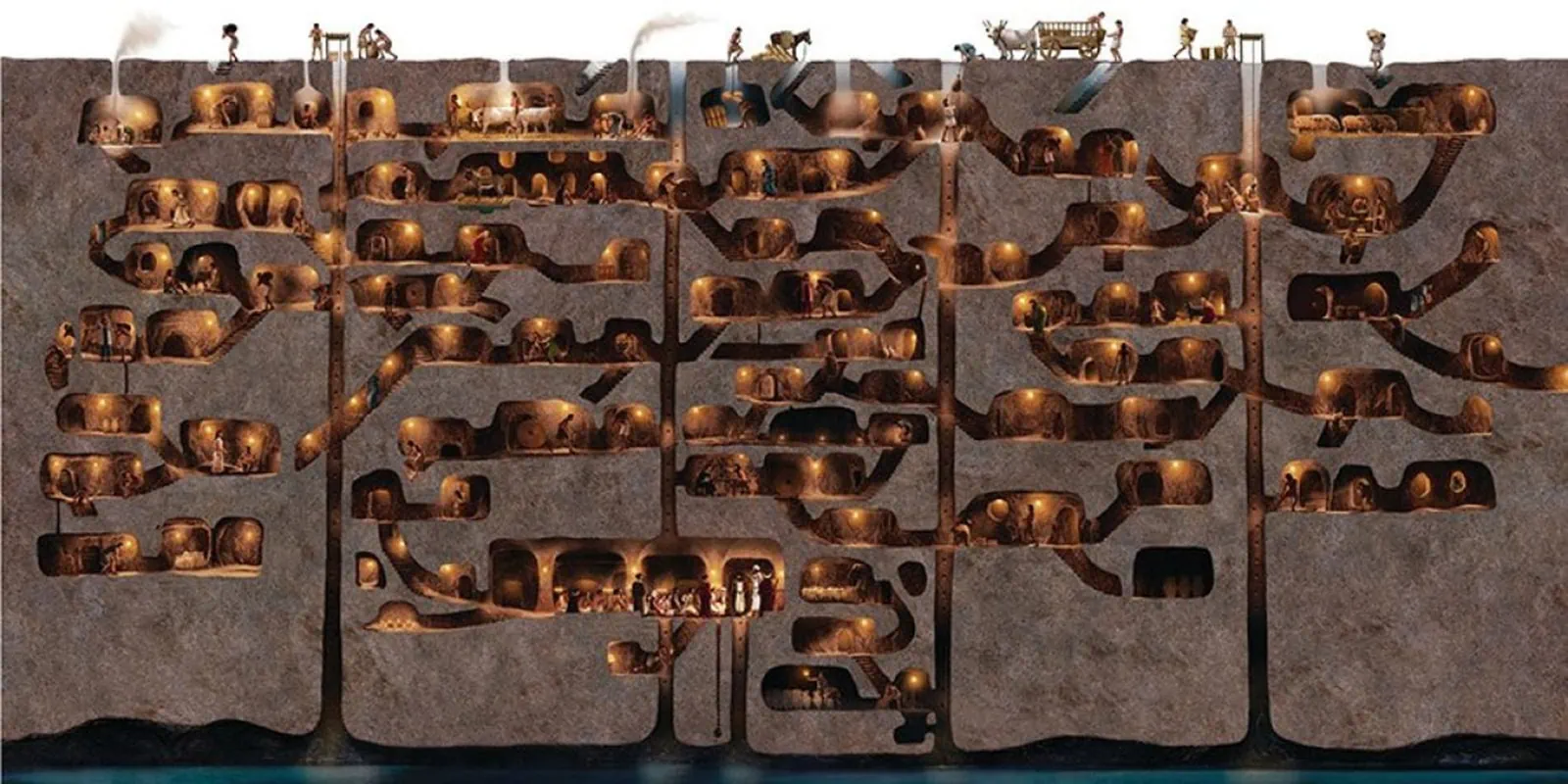
Cappadocia, which has been exposed to the attacks of various civilizations throughout history , develops its own defense and protection system by taking advantage of its unique texture, and when the invaders flocked to Cappadocia , the local people took refuge in the underground cities , perhaps the most reliable cities in the world . Not only did they take shelter, they could live in these cities for months or even years without ever going out.I n the Cappadocia region, volcanic ash rocks called tuff , suitable for carving and processing, allowed the construction of about 150-200 underground cities. According to the local people , the underground cities, all parts of which have not yet come to light, form a gigantic “underground settlement network” that is interconnected and covers the entire region .
Although it is not clear that all of them are connected to each other , it is the typical feature of underground cities that they pass through the houses in the region through tunnels . Another typical and worth examining feature is the large, heavy, round bolt stones used to close the entrances, which are almost impossible to move from the outside . These stones, called tigraz , are carved into the rock where they are. Resembling a big wheel, the crochets weigh between 200 and 500 kilos.
Information about when and by whom the construction of underground cities was first started is limited to estimates made through findings and analysis. In the defense system of the Hittite cities, underground passages called potern are frequently encountered. The similarity of the patterns with the entrance sections of the underground cities strengthens the belief that there was a Hittite contribution at any stage of its construction . Apart from this, architectural formations associated with Christianity in the underground cities , 5-10 AD. YY. indicates the Byzantine Period , 7th century. It is thought that it was expanded against the intensified Arab raids in the region . It is understood that the number of underground cities, which are generally used for religious and defense purposes, increased during this period.
Derinkuyu, Acıgöl, Özkonak, Özlüce underground cities are similar in terms of the land they form and the units and applications in their structures. Kaymaklı, Mazı, Tatlarin and Nevşehir underground cities differ from the others in terms of the location of the land they form. While the underground cities of Derinkuyu, Acıgöl, Özkonak and Özlüce are located on flat land, the underground cities of Kaymaklı and Mazı are located under the rocky slopes , while the underground cities of Tatlarin and Nevşehir are located on a hill that dominates the region .
Let’s try to open the doors of the prominent ones among these underground cities, which continue to keep their secrets persistently.
DERINKUYU UNDERGROUND CITY
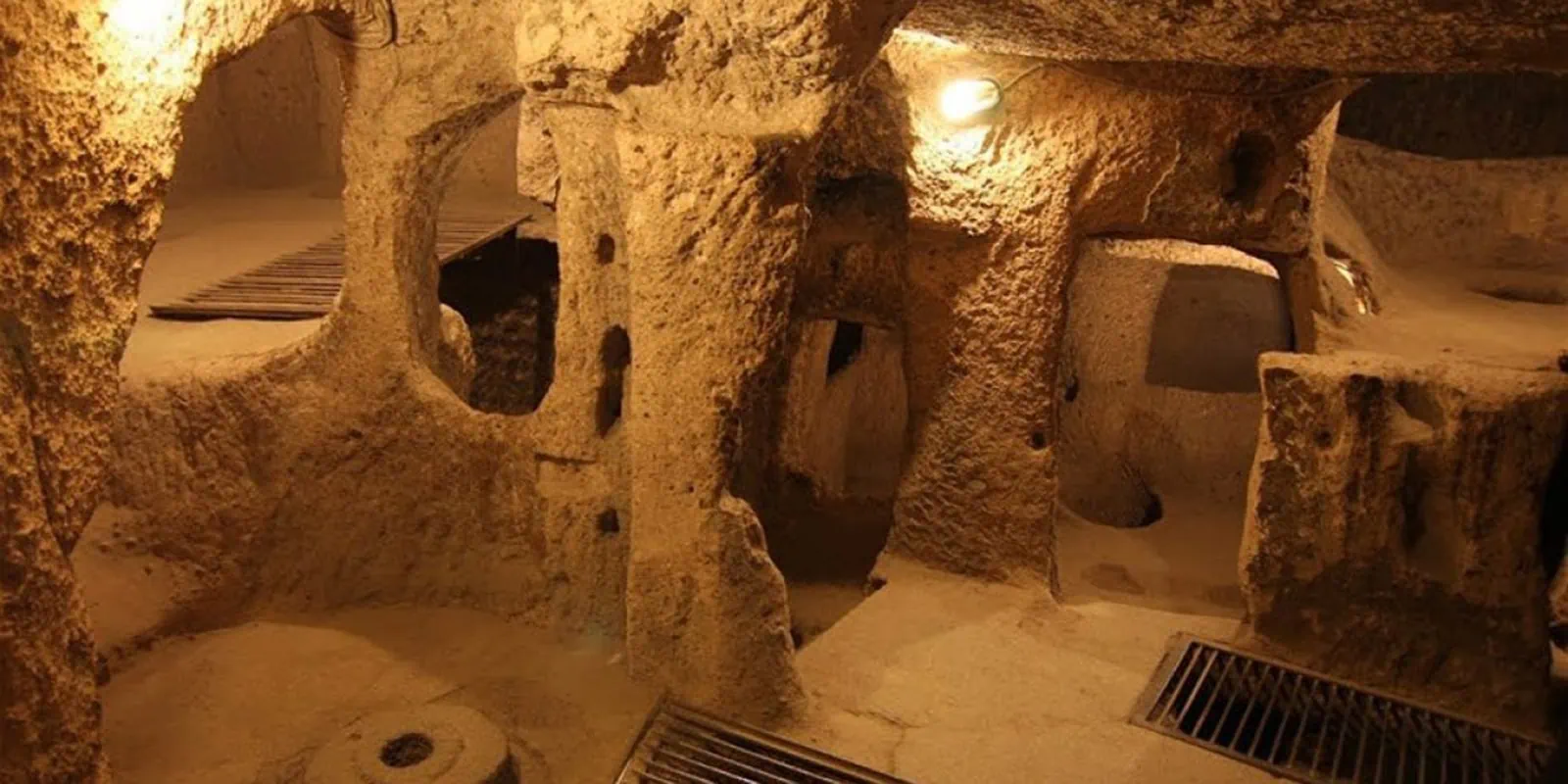
Derinkuyu Underground City is located in Derinkuyu district of Nevşehir, on the Nevşehir-Niğde highway. The ancient name of the county is Melegobia . , after the cleaning works started when it was discovered by chance in 1963 . The depth of the underground city, whose 8 floors have been cleared today , is around 55 meters . Although it is said that it can reach up to 12-13 floors in some sources , but these floors are closed yet, there is no evidence to confirm this for now.
consisted of a few small rooms that were used to meet the people’s short-term asylum needs when they were first built . However, over time, due to the changes in the historical geography , the increase in the strategic importance of the region and the acceptance of Christianity as the official religion in the region, the region is frequently attacked. This situation enabled these shelters , which were small in the beginning, to be expanded and turned into underground cities that can be lived in for a long time .
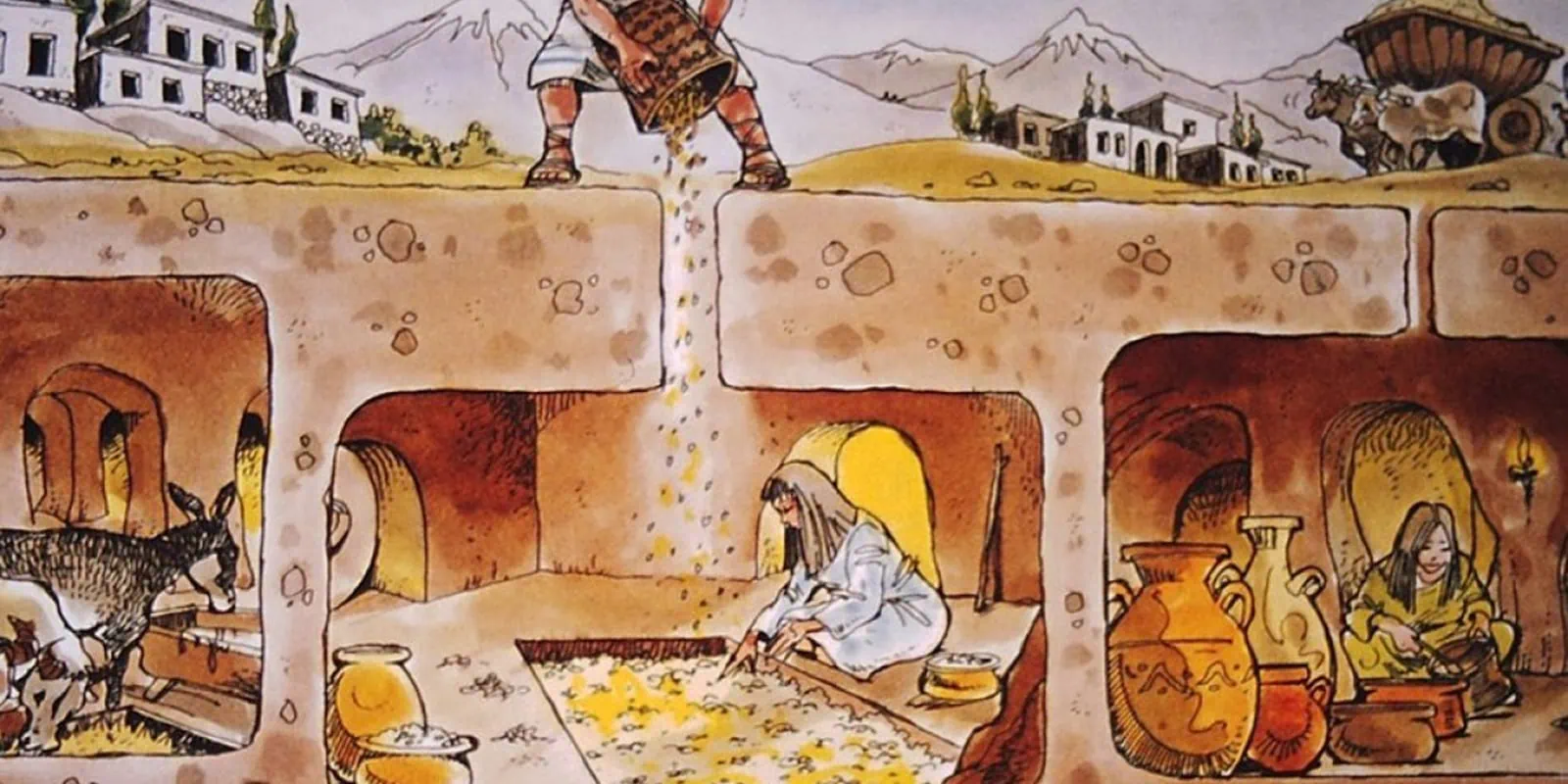
The fact that people had to hide for a long time and therefore live in these cities necessitated the construction of all units such as supply warehouses, ventilation shafts, wineries, churches, monasteries, water wells, meeting and living rooms . Unlike the others, Derinkuyu Underground City has a missionary school, confessional, baptismal pool and a unique well . It is anticipated that Derinkuyu Underground City can provide shelter for up to 5000 people .
KAYMAKLI UNDERGROUND CITY
9 km. of Derinkuyu Underground City . Kaymaklı Underground City , located in the south of Nevşehir, is in the town of Kaymaklı on the Nevşehir-Niğde highway. The ancient name of the town is Enegüp . Opened to visitors in 1964, only 4 floors of the underground city have been cleaned today. As such, it has a depth of 20 meters .
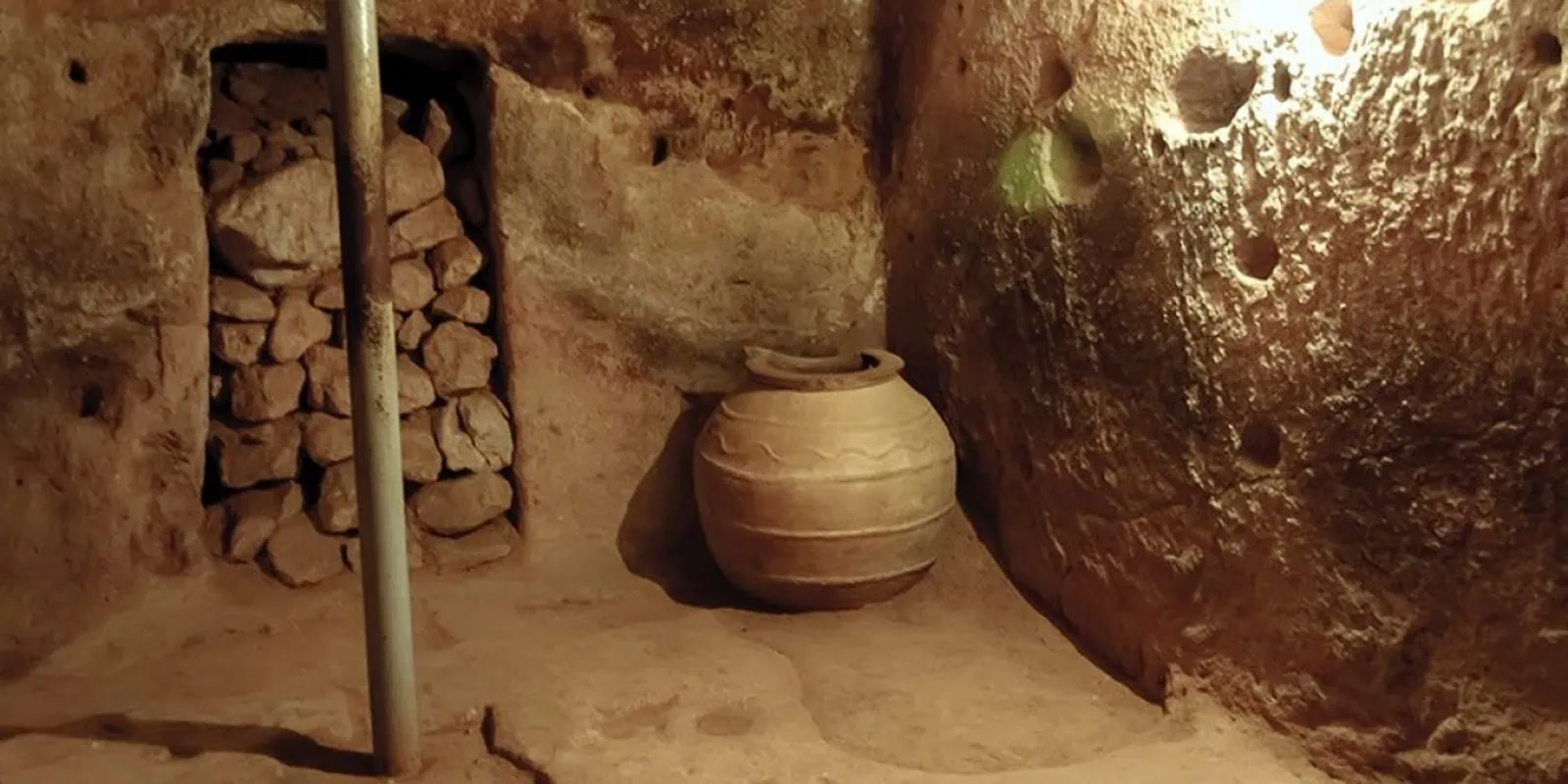
Kaymaklı Underground City is entered through a non-original, later created gate. As in other cities, the barn sections are located on the first floors so that the animals can enter and exit easily. On the other floors , there is a church , many stores , a winery , a kitchen , living rooms, a cemetery, ventilation shafts and a water well . In addition to these, there are internal cubes and six bolt stones, which were formed by carving the cube places and the floor in the form of cubes and plastering the inside . Unlike other underground cities, there is a multi-pitted andesite stone used as a smelting stone in the kitchen section on the third floor of Kaymaklı Underground City . It has been researched that this stone was used to grind copper ore .
MAZI UNDERGROUND CITY
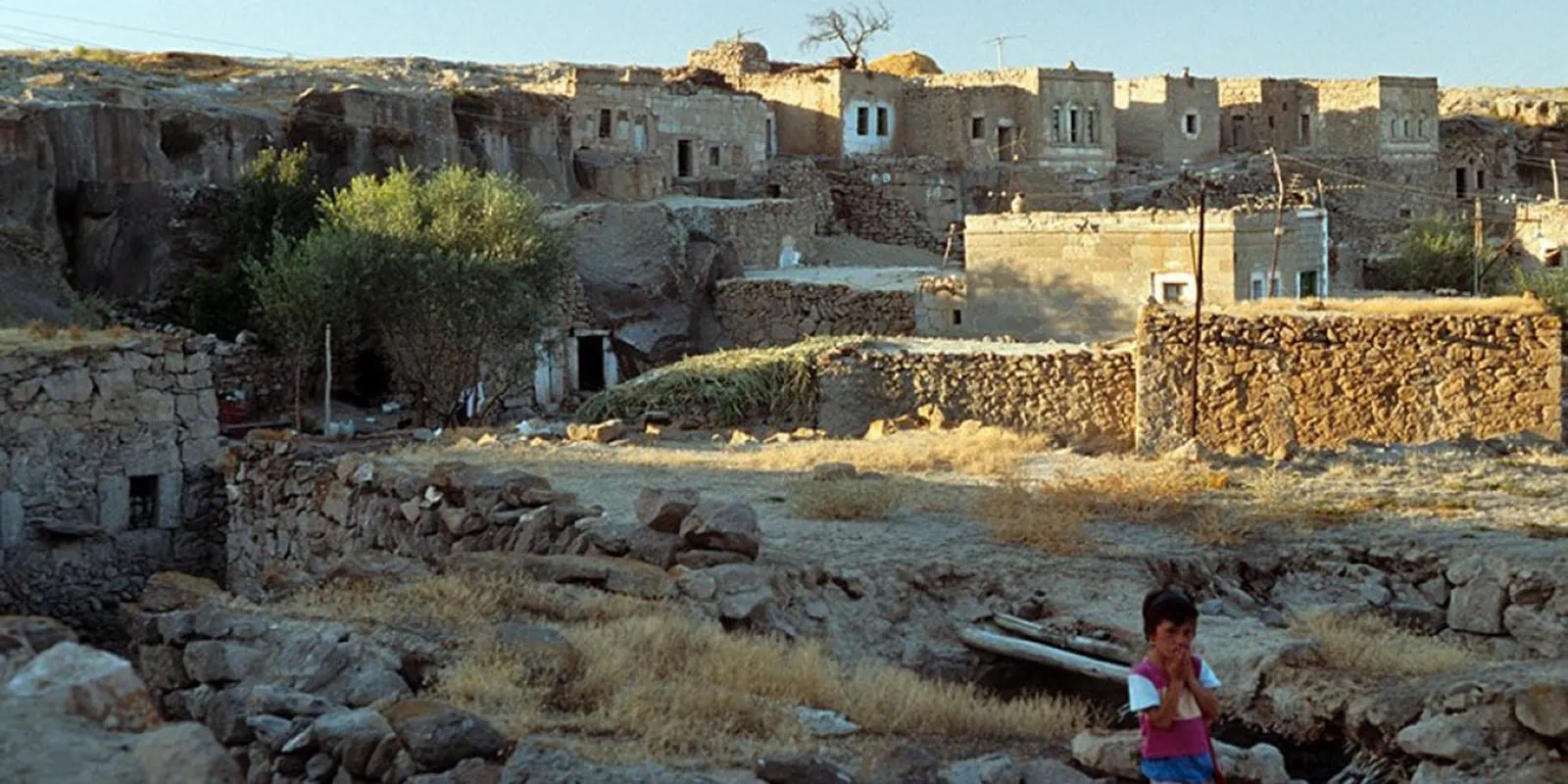
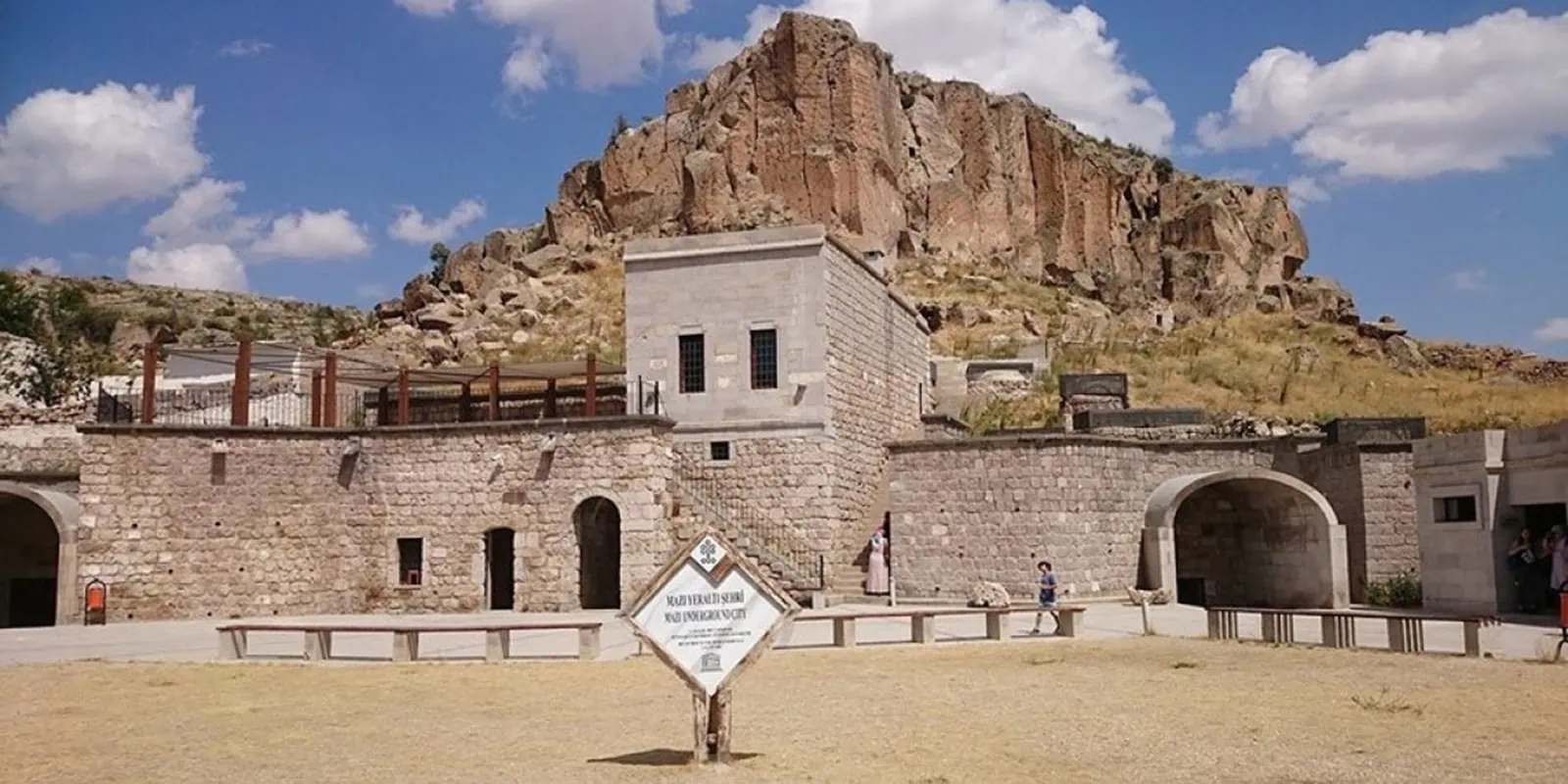
Mazı Underground City is 10 km away from Kaymaklı Underground City. It is located in Mazı village to the east. The ancient name of the village is Mazaka. Mazı Underground City , with a depth of 20 meters , is carved into the western slope of the rocks with a height of 100 meters. There are 26 rooms, 5 halls, 1 church, 4 bolt stones and a water well in the church in the navigable parts of the underground city, whose two floors have been cleaned.
Unlike some underground cities in the region, the original entrance of Mazı Underground City is preserved.
OZKONAK UNDERGROUND CITY
Although the opened part of Özkonak Underground City, which was discovered in 1972, is a single storey, this part covers a very large area . Unlike other underground cities, the city includes four nunneries and a unit that functions as a hospital , created for the education of girls according to Christian principles. Özkonak Underground City , which draws attention with its bolt stones in different forms , is an underground city with monasteries, spread over an area of 9,000 square meters , as stated in the Divan-ı Hümayun book numbered 122/3 . Considering this information, there is no evidence to confirm this information when the navigable parts of Özkonak Underground City , which is larger than Derinkuyu Underground City and adds a different functional dimension to the underground cities.
ACIGOL UNDERGROUND CITY
Acıgöl Underground City , located in the Acıgöl district of Nevşehir on the Nevşehir-Aksaray highway, has been heavily damaged and filled with soil . A small part of the single floor of this underground city, which preserves its original entrance, can be visited. of the underground city receive a passage through a corridor connected with the surrounding houses, and there is no bolt stone at the entrance. The connection of Acıgöl Underground City with the houses around its entrance is important in terms of showing this feature of underground cities.
OZLUCE UNDERGROUND CITY
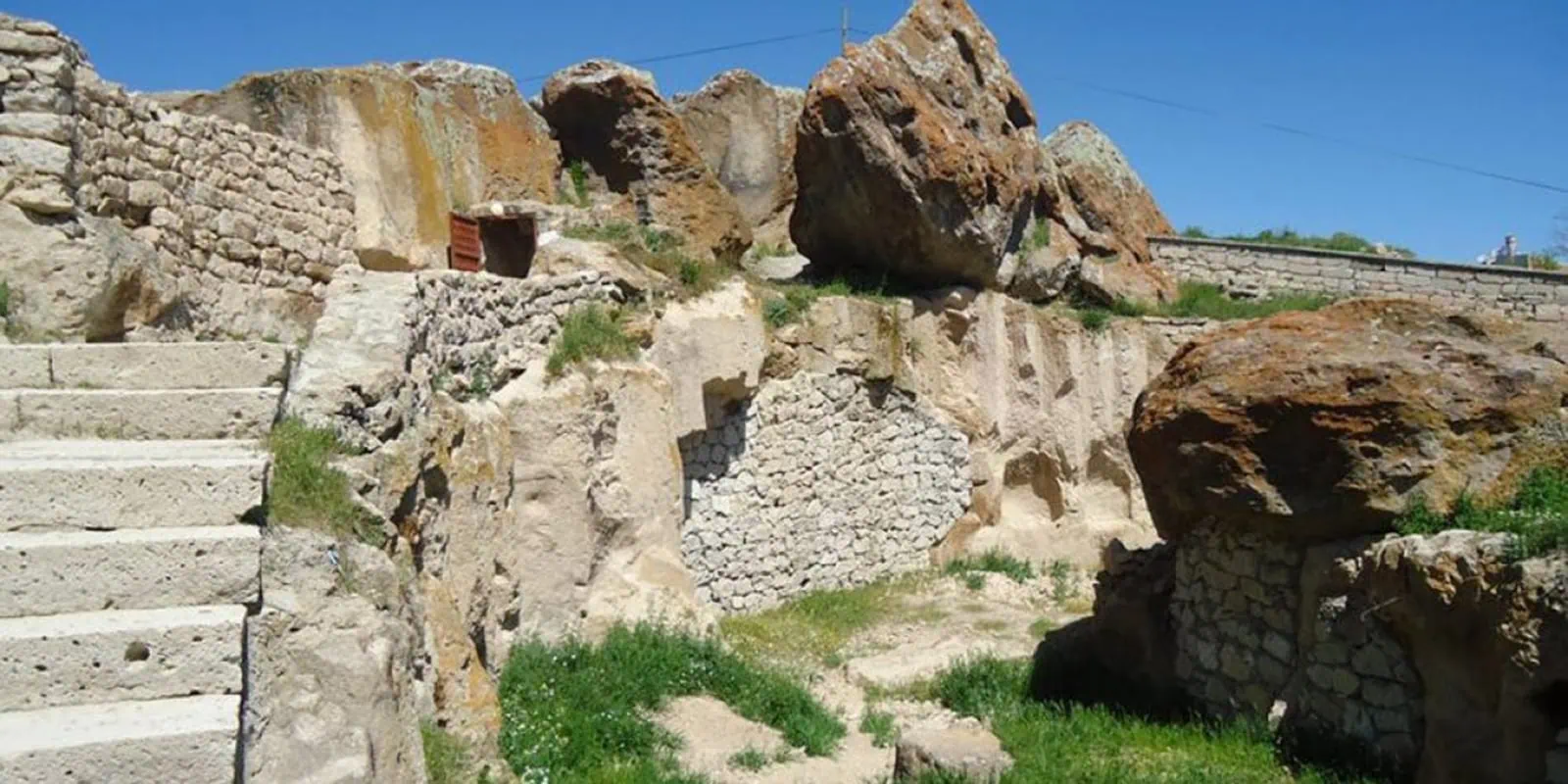
It is 6 km from Kaymaklı town on the Nevşehir-Derinkuyu highway. To the west is the village of Özlüce, whose ancient name is Zile . Özlüce Underground City is located in this village. This floor of the underground city, whose only floor has been cleared, is spread over a large area, but a small part of it can be visited. The underground city, which protects its original entrance, is one of the two underground cities that attract attention in terms of different geological features. At the entrance of the city , there are two interlocking arches made of basalt . The main place at the entrance is the largest unit of this city. There are quite long galleries in Özlüce Underground City . These galleries, which give transition to city cell-type spaces, are also important in terms of the traps on their floors .
SIVASA (GÖKÇETOPRAK) UNDERGROUND CITY
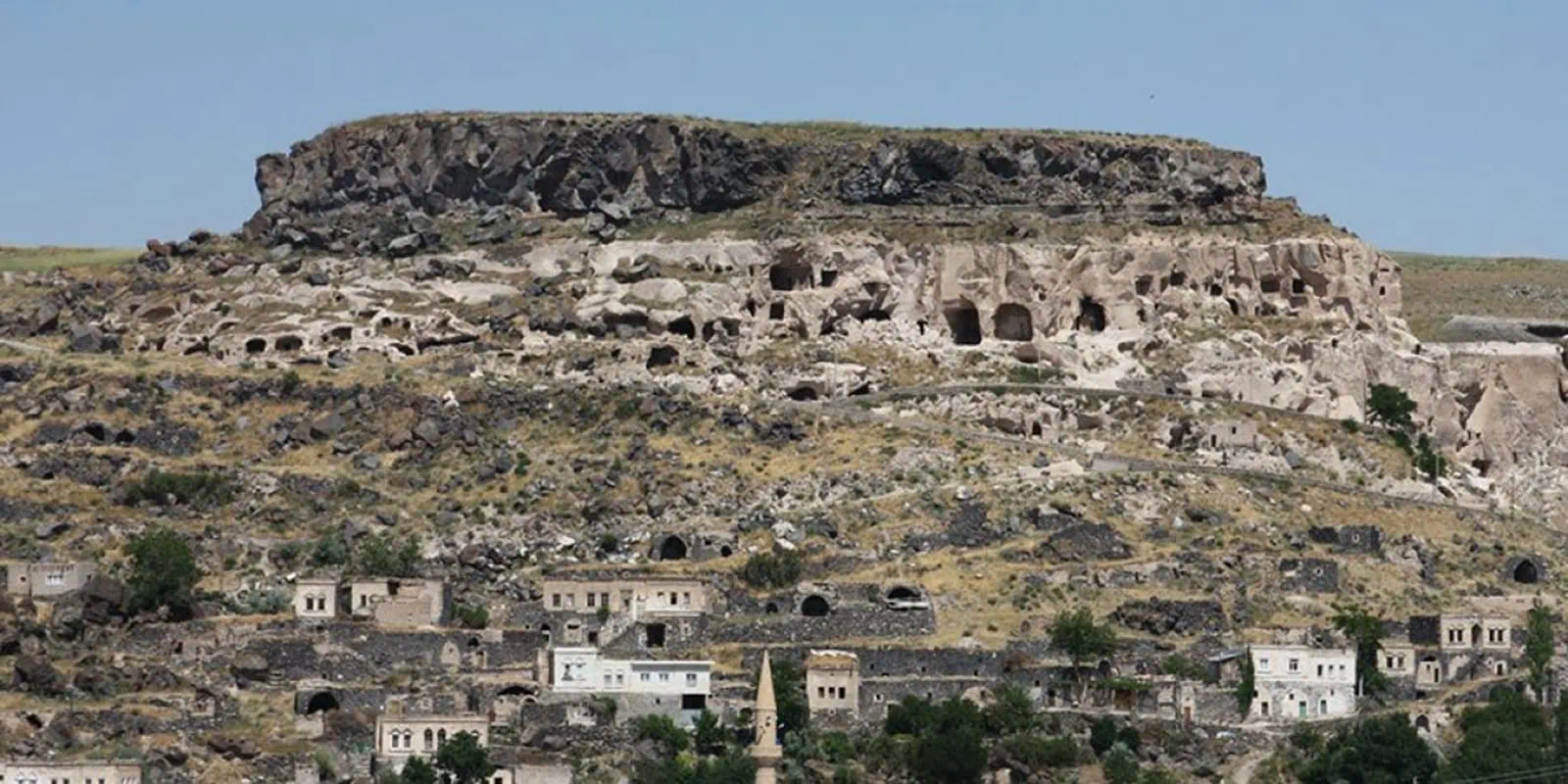
It is another underground city that draws attention with its different geological features, engraved in the mudstone and agglomerate fermentation . Sivasa Underground City, located near Gökçetoprak village of Gülşehir district of Nevşehir province , was discovered in 1989 by a French research team. Of the underground city, which has a very narrow entrance, have been unearthed . The depth of the water well , which is located on the second floor and still contains water, is 25 meters. On these two floors , there are large, asymmetrical, rectangular spaces , and these spaces are connected to each other through narrow and long corridors .
UNDERGROUND CITY OF TATS
Only two floors of Tatlarin Underground City , which covers a very large area , have been cleared. It is located 10.00 km from Acıgöl county of Nevşehir province. The underground city, located in the village of Tatlarin in the north of the city, was discovered in 1975 , partially cleaned and opened to visitors in 1991. The Tatlarin underground city , which draws attention with the fact that it is carved into a hill dominating the region and its units are large in size, is likened to a military garrison rather than an underground city due to these features. The biggest feature that distinguishes Tatlarin Underground City from other underground cities is that there are two toilets in the city . There are no toilets in other underground cities except Tatlarin and Güzelyurt . The issue of how the toilet needs are met has not been clarified yet.
SARATLI KIRKGOZ UNDERGROUND CITY
3.00 km of Aksaray-Nevşehir highway. south of Gülağaç district, 14.00 km. It is located on the south side of the town of Saratlı. Considering the plan and construction technique of the Saratlı Underground City, it is seen that the city points to the Byzantine Period. Bolt stones were used in some of the entrances of the underground city, which has its entrance from the south . In addition to the bolt stones that seem to have been removed, there are also those in their original slots. There are units such as barn, kitchen, water wells, tandoor, hearth, warehouse roofs in the underground city , three floors of which have been opened to visitors so far , and the connections between these units are provided through corridors. The entrances of the spaces are narrow enough to make the entrance difficult, the spaces are asymmetrical, rectangular or rounded. The square shaped well located in the inner parts of Saratlı Underground City is 8 meters deep.